
Reacting to: Weather.com - Why Some Homeowners Are Watering Their House's Foundation
The Trigger. Weather.com recently reported on Texans watering their house foundations, noting that while it looks like a viral gimmick, it's based on real weather science and is a legitimate, engineer-endorsed way to help protect homes in certain parts of the country. As of early September 2026, North and Central Texas has faced rapid drought deterioration with Moderate Drought now widespread and Severe Drought redeveloping across portions of North Texas; DFW has gone 52 consecutive days without measurable rainfall as of September 5. The social-media-friendly image of a homeowner spraying water around the foundation edge has become trendy. But the engineering reality is far more textured than TikTok allows.
Why the Mechanism Matters More Than the Viral Video
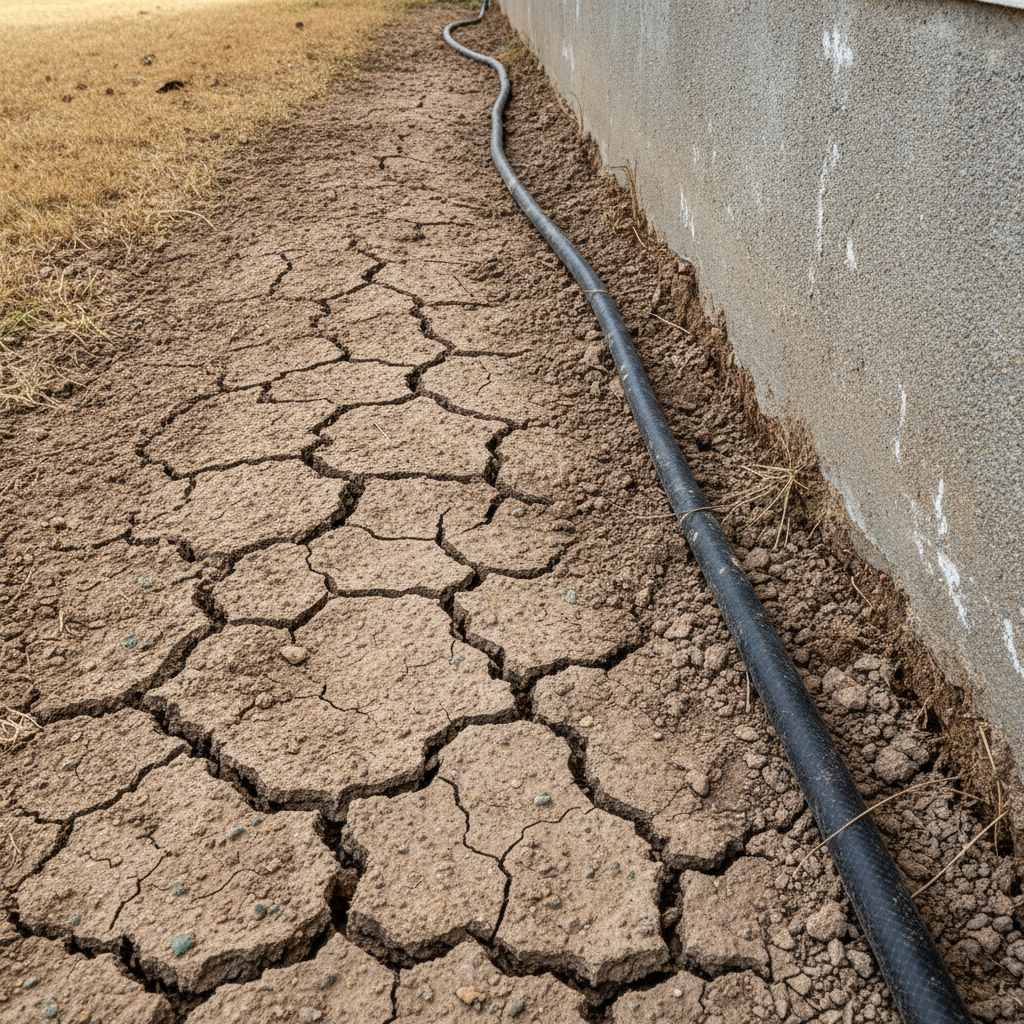
Here's what's actually happening beneath your home. Expansive clay behaves like a sponge. When it gets wet from spring rains or winter moisture, it swells and expands, pushing against the foundation. When it dries out during Dallas's hot summers and drought periods, it shrinks dramatically. That shrinkage creates gaps. During brutal heat and drought, clay dries out, shrinks and can pull away from a home's foundation, leaving gaps beneath the slab that allow the foundation to settle and leading to further damage inside the home.
The engineering logic for watering is sound: if you prevent the extreme dry state, you prevent the gap. But the implementation is where most homeowners go wrong, and why we need to separate myth from method.
Experts say watering the soil around your foundation can help prevent damage, but the trick only works for homes built on the right type of clay soil. That qualifier is doing a lot of heavy lifting. Not all clay is created equal, not all homes sit on clay that needs watering, and not all soaker hose schedules are equal.
The Critical Details Viral Advice Skips
Soil Type Matters. Dallas soil is primarily composed of the Houston Black-Heiden-Wilson clay rock formation, and in some North Texas neighborhoods like East Dallas, Oak Lawn, and older areas of Preston Hollow, over 60 percent of the soil composition is high-shrink clay, making it some of the most volatile soil in the world. If your home is on high-PI clay, watering during drought reduces edge-drop. If your home sits on sandy loam or moderate clay, adding water during already-saturated seasons can accelerate heaving and cracking instead.
Frequency and Method Are Not Optional. The remedy is deliberate, moderate watering that keeps the soil from swinging to the dry extreme; done correctly, it is cheap, low-effort, and genuinely protective. The word "deliberate" here is precise engineering language. A season-by-season foundation watering schedule should run short cycles daily or every other day through the hot, dry stretch (about June-September), a couple of times a week in spring and fall, and usually off in winter and after good rain. Little and often beats a lot, occasionally. Hosing your foundation once a week for an hour in August is not watering; that's creating a wet pocket that can backfire. Foundation watering is often exempt from drought restrictions that limit lawn irrigation, but exemption does not mean "no rules apply".
Water Restrictions and Soil Verification. Before you install a soaker hose, confirm two things: First, your municipal restrictions allow it. Dallas / Fort Worth / Houston / Frisco / Corpus Christi have year-round 2-day/week ordinances with no watering 10am to 6pm (April to October in Dallas). Foundation watering exemptions are usually available during drought, but you must verify with your city. Second, get a soil test or engineer review to confirm your specific clay is the type that benefits from watering. When Denton clay dries out, it contracts and drops, causing differential movement; a soaker hose placed 12 to 18 inches out from the slab, run consistently on a schedule during drought, keeps soil moisture stable. But that distance, that schedule, and that clay type are not universal.
What This Means for North Texas Homeowners
If you're on the Blackland Prairie (Dallas, Fort Worth, Denton, East Texas). You likely sit on Houston Black Clay or similar high-shrink Vertisol. During extended drought like we're seeing in September 2026, foundation watering is rational, not gimmicky. But don't start without a plan. Get a soaker hose, place it 12 to 18 inches from the slab perimeter, and run it 15 to 20 minutes on an early-morning schedule, 4 to 6 days a week, through the dry season. Stop after rain or when temperatures drop below freezing. A foundation inspection prior to installing a watering system can confirm whether your specific foundation and soil combination benefit from this approach.
If you're uncertain about your soil type. Before you water, consult a geotechnical or structural engineer. Drainage and grading evaluations often include soil classification that will tell you whether watering helps or hurts. A $300 to $500 soil assessment is far cheaper than undoing a foundation problem caused by misguided watering.
If your home has a known history of edge-drop or slab cracking during dry seasons. Foundation watering is a valid maintenance strategy, but it is a symptom manager, not a cure. The remedy is deliberate, moderate watering that keeps the soil from swinging to the dry extreme; done correctly, it is cheap, low-effort, and genuinely protective; done wrong, or not at all, it leaves the foundation to ride out the drought on soil that is shrinking beneath it. If cracking is already severe or recurring, a structural engineering assessment and potential foundation stabilization (piering, underpinning, or soil injection) may be necessary in addition to watering.
Track your schedule like medication. Watering is useless if you forget it for three weeks, then overcompensate. Use a timer on your hose, or better yet, a soaker system on an irrigation timer. Consistency beats intensity.
The viral trend has one thing right: the engineering is real. The drought is real. As of September 8, 2026, approximately 73 percent of Texas is under drought conditions, with 37.6 percent in Moderate Drought, 22 percent in Severe Drought, 10.2 percent in Extreme Drought, and 3.4 percent in Exceptional Drought. But foundation watering is not a one-size-fits-all band-aid. It's a targeted soil-moisture management technique that works only when you understand your clay, your drainage, your local rules, and your schedule. Do it right, and you've bought your foundation cheap insurance. Do it wrong, and you've traded one foundation problem for another.
Disusun dengan bantuan AI dan ditinjau terhadap sumber publik yang dirujuk di atas. Bukan pengganti inspeksi bersegel PE.