
Reacting to: The Weather Company
The Trigger
A few weeks ago, Weather.com published a piece recommending that some Texas foundation experts recommend watering around your home during prolonged dry spells. The article framed this as practical drought management. It's advice you'll hear repeatedly in Dallas real estate conversations, neighborhood Facebook groups, and contractor sales pitches. The problem is it's simultaneously correct and dangerous, depending on what sits beneath your slab.
Why the Myth Exists (and When It's Actually True)
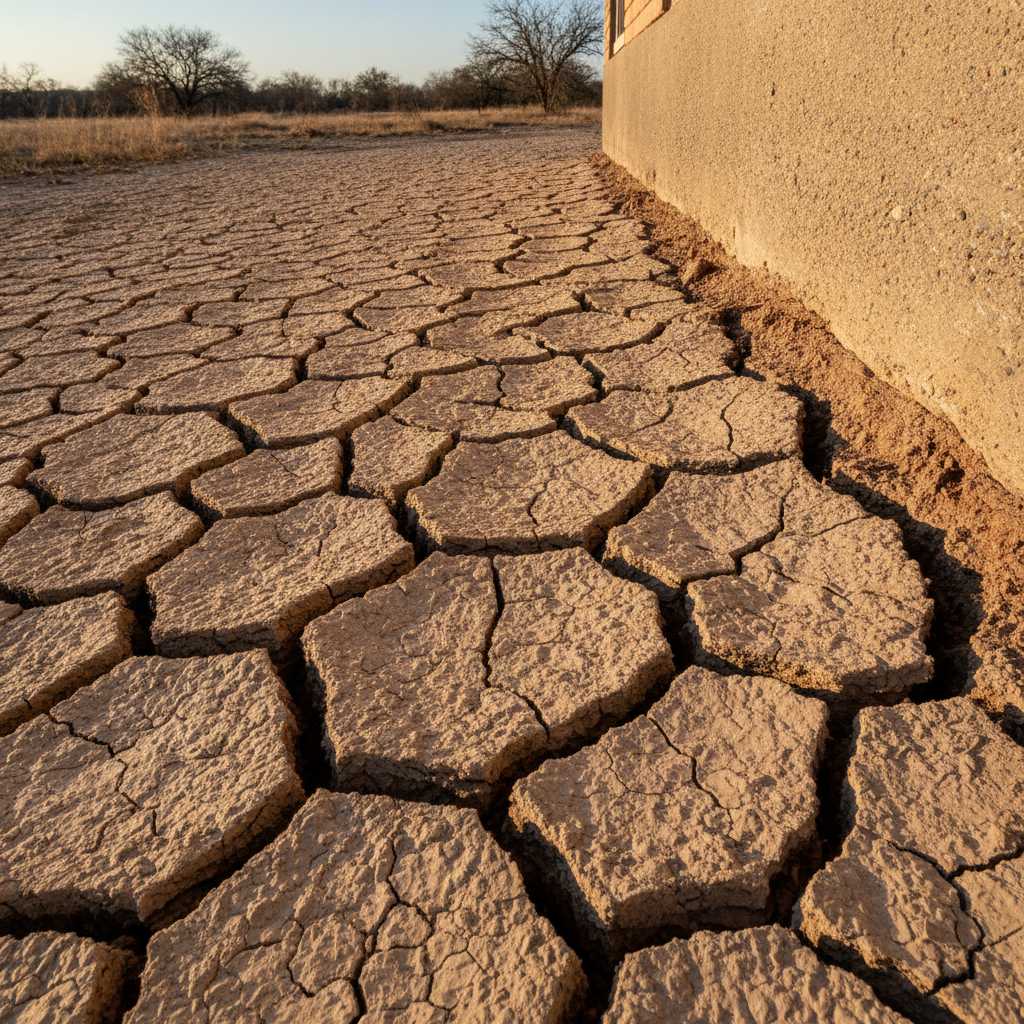
The science behind foundation watering is sound enough at first glance. Much of north and central Texas sits on expansive clay soil. When that clay gets wet, it can swell dramatically. But during brutal heat and drought, it dries out, shrinks and can pull away from a home's foundation. When clay shrinks, it creates voids under the slab. A foundation settling into those voids is a real structural event. Cracks form. Gaps open at door frames. Floors begin to slope.
But here's what gets lost in casual advice: the same advice can be a disaster if you don't live on the right type of soil. That's not hyperbole. It's the difference between stabilizing a home and triggering foundation failure.
The physical mechanism starts with clay mineralogy. Dallas soil is primarily composed of the Houston Black-Heiden-Wilson clay rock formation. In some North Texas neighborhoods, especially East Dallas, Oak Lawn, and older areas of Preston Hollow, over 60% of the soil composition is high-shrink clay, making it some of the most volatile soil in the world. Not all clay is the same. High-plasticity clay (what geotechnical engineers call a high Plasticity Index or PI) swells and shrinks more aggressively than other soils. Houston Black Clay can expand in volume by as much as 30 to 40 percent when fully saturated.
If your lot has high-PI clay and you're in a genuine drought where the ground is pulling away from your foundation edge, watering the perimeter can restore hydrostatic pressure to the clay, allowing it to re-expand and re-contact the slab. For that specific scenario, the advice works because you're reversing a known deficit. The risk is low if you're addressing an existing shrinkage problem.
Where Watering Causes Foundation Catastrophe
Now reverse the scenario. Your home is built on moderate-plasticity soil or mixed fill. Your drainage system is marginal. And instead of a drought, you're watering your foundation during normal or above-normal rainfall months.
What happens: When clay gets wet from spring rains or winter moisture, it swells and expands, pushing against the foundation. If you're also running soaker hoses or flooding the perimeter, you're increasing pore pressure beneath the slab beyond what the foundation was designed to handle. In Texas, where "black gumbo" clay can swell by 12% and exert 10,000 pounds of pressure per square foot, 65% of all foundation issues are tied directly to this volatile soil movement. You can actually accelerate heave and differential settlement by adding water at the wrong time to the wrong soil type.
The structural consequence: the slab heaves up on one side, stays flat on another, and the framing above experiences shear stress it wasn't engineered for. Drywall cracks reappear monthly. Door frames separate from walls. Pipes crack. Interior finishes fail repeatedly until you address the actual moisture problem, not just patch the symptom.
This is why real engineers don't give one-size-fits-all watering prescriptions. Texas building codes require foundations to be engineered based on site-specific data. In DFW, a PI over 30 indicates highly expansive clay. Your home was designed for a specific soil profile with a specific moisture management strategy. Adding water without understanding that design can undo years of engineering work.
What This Means for North Texas Homeowners
Before you water your foundation, get a geotechnical assessment. In North Texas, a "standard" foundation design is no longer sufficient; 2026 building codes require foundations to be designed based on the Plasticity Index (PI) of your specific lot's soil. To verify a builder's foundation standards in 2026, you must demand a copy of the site-specific Geotechnical Report and the Engineer's Foundation Letter. If you own an older home, that report may not exist. In that case, order one. It typically costs $1,500 to $3,000. Watering your foundation the wrong way for two seasons can cost five times that in repairs.
If you do have actual shrinkage (gaps, settlement cracks, slab separation), consult a structural engineer before starting any watering program. A licensed engineer can assess whether the shrinkage is active, what soil type you're on, and whether watering is even appropriate for your design. Don't rely on contractor recommendations alone. They have financial incentive to recommend watering as the cheap fix before they pitch foundation repair. It may work. It may make the problem worse.
Manage drainage before moisture. A high soil line attracts termites and is also bad for your foundation in that it promotes moisture and water intrusion which can cause mold, wood rot, and hydrostatic pressure. If water is ponding against your foundation, that's a drainage problem. Fix the gutter, slope, and grading first. If your home is on stable, moderate-PI soil and drought is genuinely pulling it away, then talk to an engineer about targeted watering. The order matters.
Know your neighborhood's soil profile. If you live in a Dallas neighborhood built before the 1990s, especially in older sections of Highland Park, Turtle Creek, East Dallas, or Lake Highlands, your foundation has likely shifted multiple times over its lifetime. This doesn't mean your home is failing. It means the soil beneath it is alive and moving. In those neighborhoods, watering during dry periods has proven value because the clay profile is extreme. In newer subdivisions with engineered fill or pier-and-beam on sandy soils, watering can do more harm than good.
The real answer isn't watering your foundation. It's understanding your foundation, understanding your soil, and treating each one on its merits instead of following neighbor advice or contractor script. Foundation inspections and drainage evaluations give you that baseline. Then decisions become data-driven instead of fear-driven.
Related: Pre-Purchase Inspection · Structural Engineering Assessments · Talk to an engineer
Disusun dengan bantuan AI dan ditinjau terhadap sumber publik yang dirujuk di atas. Bukan pengganti inspeksi bersegel PE.