
Reacting to: Groundworks Foundation Repair Search Data 2025-2026
The Trigger
Texas ranks second nationwide in foundation repair searches over the 12 months spanning January 2025 to January 2026, according to Google Trends data. The usual story is that waiting makes repairs exponentially worse. Homeowners who address issues early spend $4,000-$7,000, while those who wait a year often face $20,000-$30,000 in repairs plus extensive interior damage. That narrative has merit, but it's incomplete and misleading about how damage actually progresses. Here's what's really happening beneath your foundation, and why speed matters less than you think.
The Load Path Breaks, Then Everything Else Does
When a slab foundation settles unevenly over expansive clay, it doesn't stay in one place and get worse in a straight line. What actually happens is a cascade of mechanical failure. The foundation was designed to transfer the weight of your home evenly into the soil below. When clay shrinks due to drought or moisture loss near a tree root, one section of the slab loses contact with the soil. The home's weight doesn't disappear. It redistributes to the sections still bearing load.
Those adjacent sections were never designed to carry that extra load. Foundation problems don't spread linearly; they accelerate, because when one section of foundation settles, it creates stress on adjacent areas that fail faster than the original problem area did. This is mechanics, not dramatics. You've essentially turned one problem into a multi-point failure mode. Each month that passes is another cycle of freeze-thaw in winter, drought-then-deluge in Texas spring, and the clay continues to move. Every cycle stresses more perimeter, more interior connections, more plumbing and framing.
Contractors often describe this as "the domino effect," but that's lazy language. It's load redistribution creating secondary fracture planes. By the time you call for a quote, you don't have a single settlement point. You have a foundation that has re-equilibrated itself around a failure zone, and every other section is now marginally weaker than design intended.
Why the Cost Does Climb, and When It Actually Matters
Yes, a crack that costs $250-$800 to seal today can become a $15,000-$30,000 pier project if the underlying cause progresses unchecked, and repair costs have risen 15-20% since 2020 due to labor and materials inflation. But that's two different things happening at once. One is real structural escalation. One is market inflation that would occur anyway.
The structural part is legitimate. Early repair often means sealing isolated cracks or stabilizing a wall before it moves further, which is often far less costly than later-stage solutions such as full underpinning or piering once structural movement has progressed. A few isolated cracks addressed by crack injection can work. A home where settlement has progressed across multiple zones requires piers to be driven under multiple bearing points, not one. That's the cost driver. It's not conjecture; it's the load distribution actually being different.
The inflation part is real too, but you'd pay it next year if your home doesn't have foundation damage. It's separate from the decision to repair.
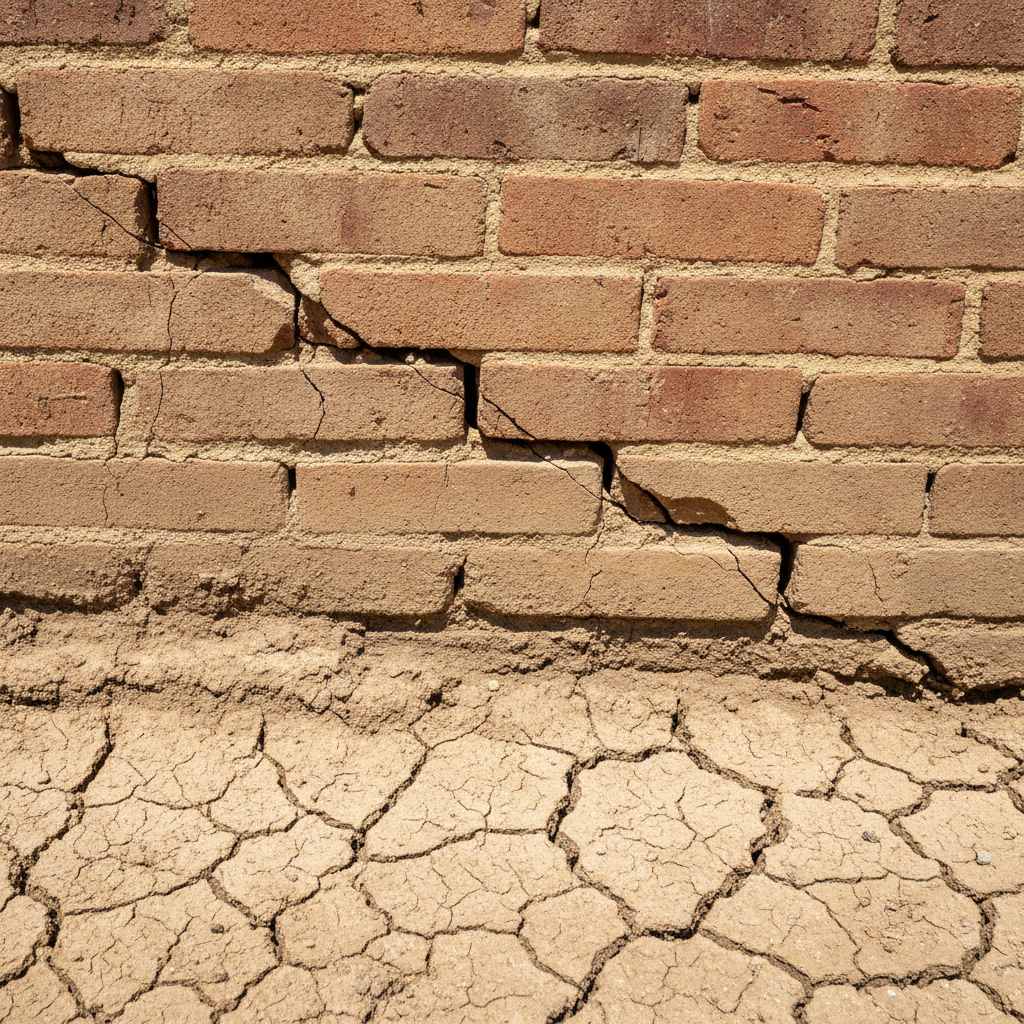
What matters is: has the failure spread spatially? Foundation problems in North Texas do not stabilize on their own due to expansive clay soil. If you've got one stair-step crack through brick, you're looking at a localized settlement point. If you're seeing doors binding in multiple rooms, cracks at interior and exterior walls, and gaps at the header, the load path has already shifted. At that point, you're not doing a crack seal. You're underpinning. That's the escalation to watch, not the calendar.
What to Actually Do in North Texas Right Now
Get a structural engineer, not a contractor. You need someone who will tell you whether you have a single settlement zone or a distributed failure. A contractor has already pre-sold you on the idea that you need piers. An engineer will tell you what you actually need. That costs $800-$1,500 for a proper report, and it saves you from either over-repairing or being blindsided by incomplete work.
Photograph and document early warnings now. Stair-step cracks in brick, doors sticking, ceiling cracks radiating from windows, gaps at the perimeter. Date stamp them. In six months, rephotograph the same spots. If they haven't grown, you have time to think. If they have, your decision is made. Movement is the signal, not age.
Stop watering unless you're on the active-zone clay belt and it's a multi-month drought. The common advice to water your foundation year-round is counterproductive for most of DFW. Watering during droughts can prevent costly damage, but only if you live on expansive clay soil that shrinks and swells with the weather, and the same advice can be a disaster if you don't live on the right type of soil. Over-watering locks moisture into the soil, causing year-round heave and stress. Water only during documented extended drought, and stop once rains return. A soaker hose for six weeks during peak summer drought is tactical. Daily watering spring through fall is sabotage.
Get a pre-purchase inspection if you're buying. The cost and delay are trivial compared to inheriting someone else's settled foundation. Sellers rarely disclose ongoing settlement, and the next owner is stuck with it.
In North Texas, the expansive clay is not going anywhere. The cost premium for early repair is real when early means six months before widespread failure, not six months before a single crack appears. The difference is whether your home has begun to re-equilibrate around a failure or whether you've caught it in the failure itself. That's an engineering question, not a calendar question.
Foundation inspections by a PE can answer it. So can a pre-purchase property inspection if you're buying. If you're already seeing multi-point warning signs, call an engineer before a contractor. Structural engineering assessments exist for exactly this reason.
Disusun dengan bantuan AI dan ditinjau terhadap sumber publik yang dirujuk di atas. Bukan pengganti inspeksi bersegel PE.