
Reacting to: Plant Maps: Current Drought Conditions for Texas
In mid-July 2026, North Texas experienced significant drought stress. Approximately 22% of Texas is under active drought conditions, with an additional 15% classified as Abnormally Dry. That matters for foundations because homeowners often think the worst is over once rain returns. It is not. The damage is often still coming.
The Lag Between Shrinkage and Visible Cracking
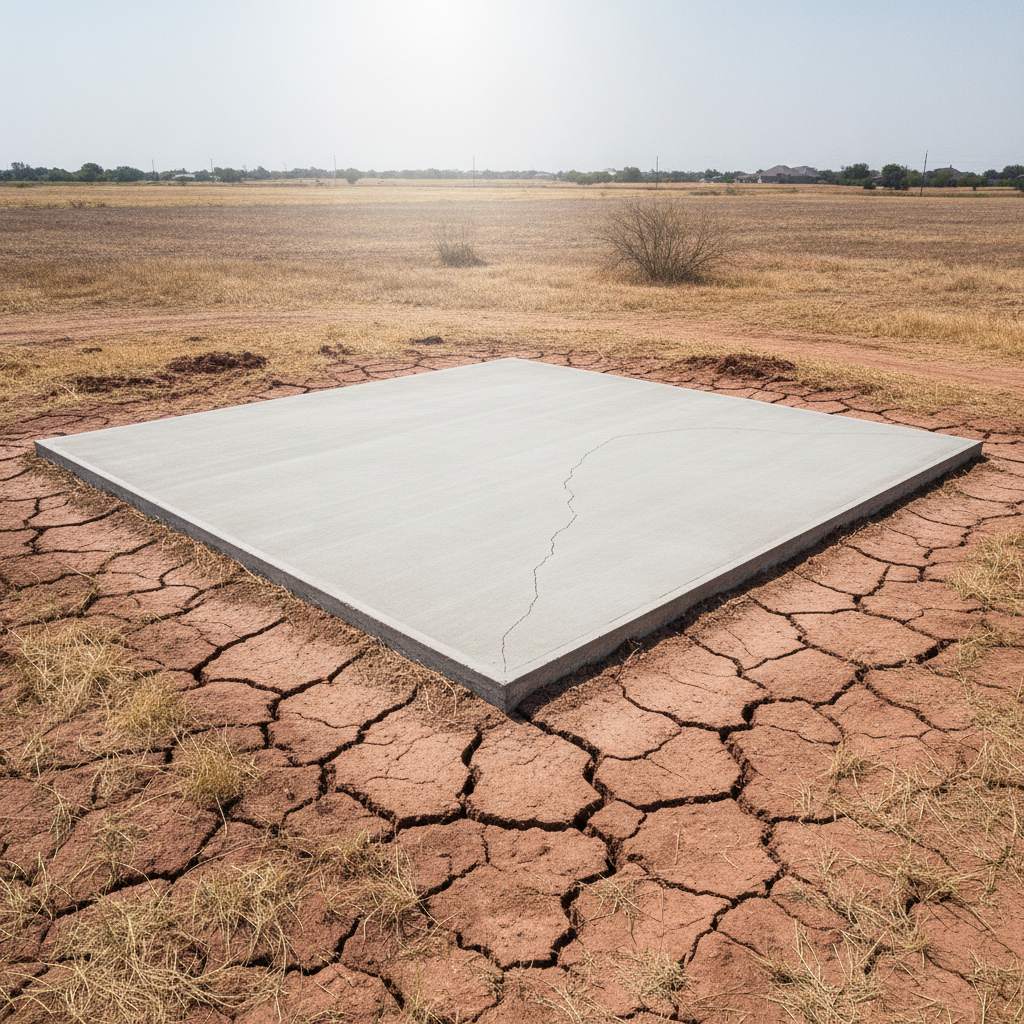
Here is the mechanism most homeowners do not understand. When clay soil dries, it shrinks. Soil containing montmorillonite expands when wet and shrinks when dry. The slab above it loses support, particularly at the edges where drainage or poor grading has kept adjacent soil drier. The concrete does not crack immediately. It flexes, bridges, and redistributes load. Then, days or weeks later, internal stress builds past the tensile strength of the concrete, and the crack suddenly appears.
This is not the same as plastic shrinkage or early-age cracking that happens in the first 24 hours after pour. Long-term drying shrinkage cracking often develops gradually and can grow in width over time if unaddressed. In North Texas, the trigger is soil moisture cycling, not concrete curing schedules. The slab has been there for years. The soil beneath it moves seasonally. Crack appearance lags the actual foundation movement by a surprising margin.
Why does this matter for your inspection? If you notice a new crack and assume it appeared because it was dry last month, you may have already missed the critical phase. Poor drainage is the accelerant, and water management directly affects how much moisture reaches soil beneath the slab, therefore how dramatically soil moves. The shrinkage is already done. The crack is just the visible record of it.
What This Means for Texas Homeowners Right Now
In late July 2026, we are likely in the middle of a transition. Drought stressed the soil. Rain may have returned in parts of North Texas. But that does not reverse the shrinkage that already happened. The foundation movement is complete. The cracking is still revealing itself.
This is the worst possible time to assume your foundation is stable. If you have not noticed cracks yet, do not interpret that as safety. If a recent inspection found none, that does not mean none are forming. The time to inspect is now, at the tail end of the dry cycle, before you convince yourself that the rain fixed everything.
Horizontal cracks prove more concerning than vertical cracks because they indicate structural distress rather than normal shrinkage. Cracks wider than 1/8 inch suggest significant movement. Do not wait for a crack to reach 1/8 inch to photograph it. Document everything with dates. Small cracks that appear now will tell you whether the foundation is stable or still moving.
Get a professional foundation inspection before late fall. Do not assume that because the weather has been dry that your slab is fine. The slab may be cracking right now, and you will only see it once the damage is already done. If you are buying or selling, insist on a Phase II inspection during this window. Do not rely on summary observations from a general home inspector.
Also check your drainage and grading. If water ran toward your house during rain, it will run toward your house during the next rainy season. Common drainage problems include negative grading that slopes toward the house, gutters discharging too close to the foundation, and short or missing downspout extensions that create concentrated saturation zones. Fix drainage now, not after the next crack shows up. It costs less to prevent than to repair.
For anyone who has already noticed cracking or foundation movement signs, contact a structural engineer. Do not contact a repair contractor. You need a PE who will tell you the actual cause and whether the movement is ongoing or stable. That report becomes your baseline for the next inspection in six months.
The reason this timing matters is that forensic-grade inspections can detect micro-movement and establish whether a crack is old and stable or new and active. Time-stamped photos and measurements are evidence. A crack that appeared three weeks ago is different from one that appeared three years ago, and that difference changes the urgency and cost of repair.
Disusun dengan bantuan AI dan ditinjau terhadap sumber publik yang dirujuk di atas. Bukan pengganti inspeksi bersegel PE.