
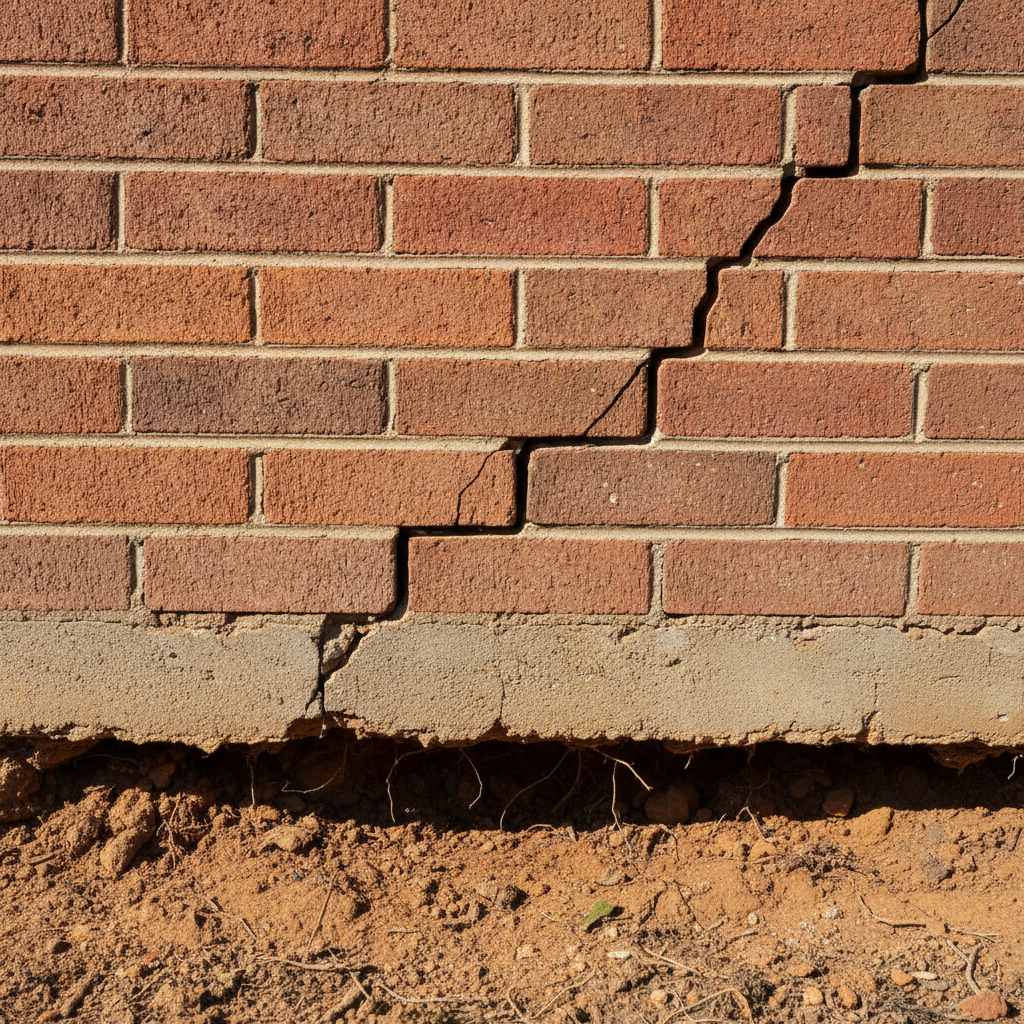
The trigger: As Houston transitions from dry summer into fall rainy season, soil under thousands of homes is about to swell again, and contractors are warning that foundation damage will follow. This seasonal swap happens every year in Texas, and homeowners often mistake it for healing. It is not.
The Physical Mechanism: Soil Movement Under Load
Here is what happens in clay-heavy soil like you find in North Texas and the Texas Blackland Prairie. North and central Texas sits on expansive clay soil that swells dramatically when wet, but dries out and shrinks during heat and drought, pulling away from a home's foundation. That part is well known. What gets missed is the *uneven* nature of that movement.
During six months of 100-degree heat with no rain, the soil around your foundation dries from the surface down. But it does not dry evenly. The edges dry first and pull hardest. The soil directly under the slab (which stays cooler and slightly moister longer) shrinks slower. This creates shear: the perimeter pulls away, settling happens in stages, and the foundation tips or flexes unevenly.
When fall rains arrive and that dried-out soil suddenly absorbs water again, it swells. But swelling is not the reverse of shrinkage. The soil that cracked and compacted during drought does not return to its original density. Expansive clay soils shrink during dry weather and swell after heavy rain, placing stress on the foundation over time. The foundation has already shifted. Now it is being pushed upward by newly hydrated soil, but not uniformly. Gaps remain under parts of the slab. The structure experiences rebound loading, which is often *more* damaging than the initial settlement.
Why Visible Cracks Appear Later, Not Sooner
Foundation crews on the I-35 corridor report their busiest months are late August into September, right when soil moisture bottoms out. But that timing tells you when damage *becomes apparent*, not when it *happens*. The actual movement started in June. The cracks and sticking doors show up in August and September because that is when uneven settlement reaches a critical threshold under the weight of the house.
Then the rains come in October or November. Homeowners hope their foundation will "rebound" and those cracks will close. Sometimes minor settlement does reverse a little if watering or rain quickly restabilizes moisture. But if structural damage has already occurred, if a crack has gone through the slab, if piers have shifted, swelling soil will not erase that. It will load the damaged structure differently, possibly worse.
A settlement crack that costs a few hundred dollars to seal today can turn into a $15,000 pier job if water intrusion and soil movement are allowed to continue through several wet and dry cycles. That is not metaphor. That is the dollar sequence homeowners face because they waited through the season change hoping for a fix.
What You Should Do Right Now
If you live in North Texas, Tarrant County, Collin County, or Denton County, you are in foundation country. Late September and early October is not the time to relax. It is the time to act.
Get a PE-sealed inspection. Not a contractor walk-through. A licensed structural engineer. You need a report that documents current condition, identifies whether movement is active or stabilized, and quantifies any slab displacement. That report costs $300 to $1,000 and becomes your proof of condition before the wet season stresses the structure further. If you later need repairs, that baseline report proves what was there before the rain and what changed because of it.
Photograph and document cracks and gaps. Do it today, in daylight, on your phone. Note the date. If a crack is wider than a credit card (roughly 0.75 mm), if soil has separated from the foundation edge, if doors stick or windows bind, document it with photos from two angles and the date stamp. This becomes critical evidence if you sell, buy, or file a claim.
Check your drainage and grading immediately. Ensuring gutters and downspouts direct water away from the foundation and keeping drainage systems clear contribute to healthier soil conditions. Before October rain, walk your perimeter. Does water pool against the foundation? Are gutters clogged? Does soil slope toward or away from the house? Fix obvious problems now. Poor drainage is the single cheapest problem to fix and the most expensive to ignore.
Do not assume minor symptoms will heal during the wet season. Sticking doors, hairline cracks, soil gaps. Those are motion flags. They mean the foundation moved. Seasonal moisture rebound might cause some minor closure of small cracks, but it does not mean the structure is sound or that damage is reversing. Get a professional assessment before you buy or sell, not after.
Know that homeowners insurance will not cover this. Standard Texas homeowners policies almost never cover foundation repair caused by soil movement, settling, or drought, except when a sudden covered peril like a slab leak triggers the damage. Plan to pay out of pocket if repairs are needed. Start conversations with contractors now, not in November when every crew is booked and you are panicking.
The Engineering Bottom Line
Fall rains are not a cure. They are a season change that reloads an already-stressed structure. If you see signs of movement now (late September), get a structural engineer involved before October 15. Not for repair quotes. For diagnosis. That one inspection, done right, saves you tens of thousands in wrong decisions or delayed action.
The transition from drought to wet is when damage accelerates, not when it heals. Act now.
Contact Lighthouse Engineering for a PE-sealed foundation or structural assessment in North Texas.
Disusun dengan bantuan AI dan ditinjau terhadap sumber publik yang dirujuk di atas. Bukan pengganti inspeksi bersegel PE.