
The Trigger: The state of Texas has adopted the 2024 International Mechanical Code (IMC), 2024 International Fuel Gas Code (IFGC) and the 2024 International Residential Code (IRC). This happened August 5, 2026, and most homeowners and contractors don't yet grasp what it actually means on the ground. Read the full TDLR announcement here.
What Actually Changed in Foundation Rules
Here's what matters: Chapter 4 of the 2024 IRC requires soil tests where conditions warrant and evaluates proximity to slopes and minimum depth requirements. That's not new on its face. The real issue is that every foundation and/or footing, or any size addition to an existing post-tension foundation, must be designed and sealed by a Texas-registered engineer, and this amendment has been carried forward to 2024 IRC. Meaning: if you're in North Texas and you're adding a deck foundation, a retaining wall footing, or touching a post-tensioned slab, you need a PE stamp. Full stop.
For expansive clay soils, which North Texas is drenched in, the requirement becomes mandatory: foundation and floor slabs for buildings located on expansive soils shall be designed in accordance with Section 1808.6 of the International Building Code. That section forces you to pick one of three paths: go deep with piers below the active zone, remove the clay and replace it, or use a post-tensioned slab. None of these is cheap, and none is optional anymore.
Why This Matters and Doesn't Matter at Once
The adoption order was swift, but implementation lags. Your city might not have adopted the 2024 IRC locally yet. Texas does not have a single, mandatory statewide building code. Instead, the state adopts the International Residential Code (IRC) as the minimum standard that municipalities must meet or exceed. The true authority lies with local jurisdictions which adopt a specific version of the IRC and often add significant local amendments to address regional conditions like expansive soils, high winds, and flooding. Translation: check with YOUR city or county, not the state.
But here's the punch: once your jurisdiction transitions to 2024, every permit application for foundation work will demand geotechnical data and a PE-signed design. For builders and contractors, this means longer lead times. Geotechnical testing takes 2 to 3 weeks minimum. PE stamp turnaround is another 5 to 10 business days. Your simple foundation job now sits in a queue it didn't before. For homeowners buying or repairing, this translates to cost. Soil testing runs $500 to $1,500 for most residential sites. PE design fees for a simple footing addition can start at $1,200.
The Real Engineering Story
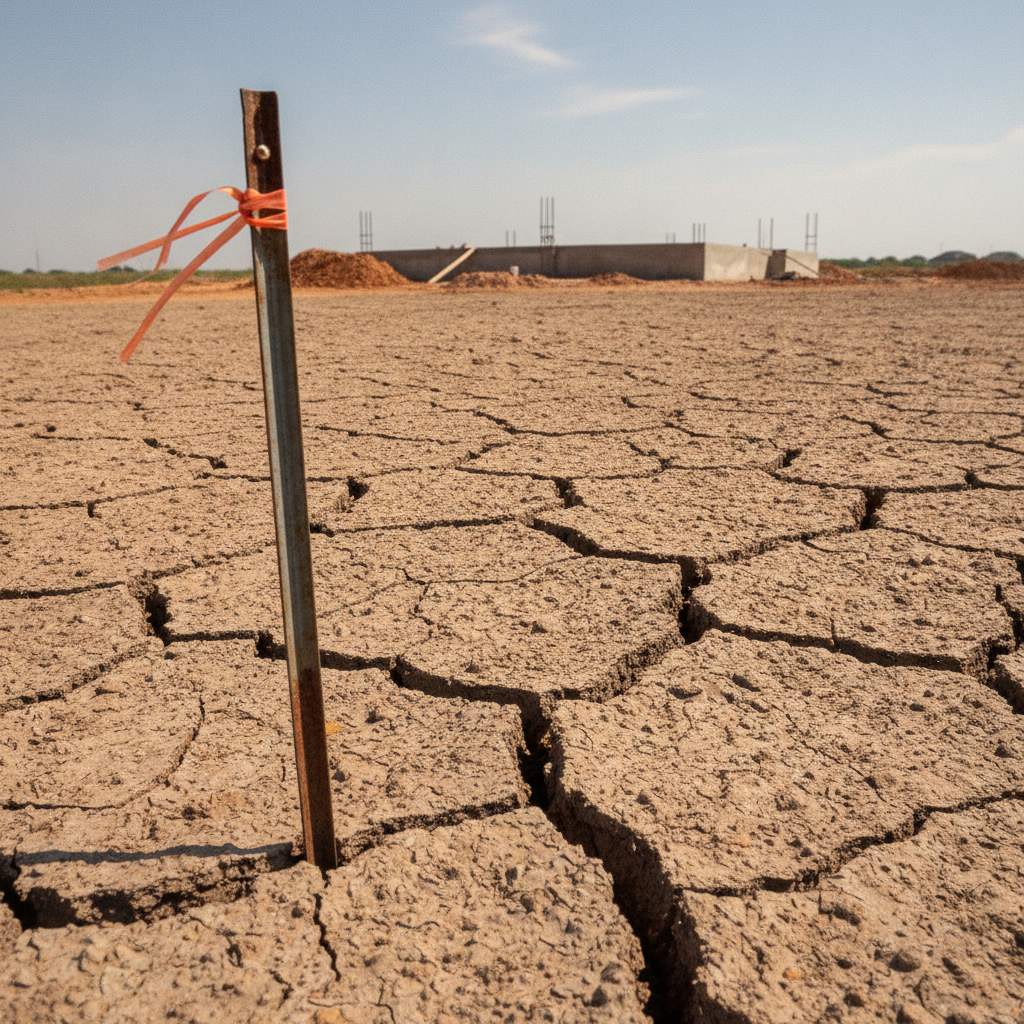
Let's be clear: this isn't bureaucratic overhead for its own sake. North Texas clay can heave with 60 to 100+ PSF of lateral pressure over a single wet winter. North Texas's expansive montmorillonite clay causes seasonal ground movement of 3 to 6 inches, far more than most older walls were built to handle. A foundation designed without accounting for that is a ticking clock. The 2024 IRC codifies what good engineers have been doing anyway: proving, with data, that your footing will either flex with the soil or sit below where it flexes.
The requirement for PE sealing on all footings, including repairs and additions, closes a loophole where contractors used to pour a pier extension or add a retaining wall footing without professional review. Was that footprint stable? Drained? Anchored? Without a PE, nobody could prove it. Now they have to.
What You Should Do Right Now
If you're planning any foundation work in North Texas, contact your local building department this month. Ask which version of IRC they've adopted. If it's still 2021, you have breathing room. If they've already switched to 2024, or are planning to in the next 90 days, change your timeline. Get a geotechnical engineer involved early. It's cheaper to budget for testing and design upfront than to restart a permit application mid-stream.
For realtors: disclose foundation repair history, and if the buyer needs a PE inspection for any addition or repair, factor in 4 to 6 weeks lead time and $2,000 to $4,000 in professional fees. For homeowners buying older homes, a foundation inspection now is even more critical. You need to know if the existing slab was designed for expansive soils. If not, and you want to build on it, the new code will require remediation.
For contractors: this is a moment to partner with structural engineers early and often. The era of rule-of-thumb footings is over in Texas. Know your soil, know your loads, and know that every seal on a permit drawing reduces your liability and your customer's risk. Drainage is half the battle; a PE will specify it. Inspections will verify it. The cost is real, but the foundation won't fail.
The 2024 IRC didn't invent these rules. It formalized them. North Texas needed that formalization because our soil doesn't forgive guessing.
Disusun dengan bantuan AI dan ditinjau terhadap sumber publik yang dirujuk di atas. Bukan pengganti inspeksi bersegel PE.