
The Trigger
Texas adopted the 2024 International Mechanical Code (IMC), 2024 International Fuel Gas Code (IFGC), and the 2024 International Residential Code (IRC) following a rigorous review process by the Texas Department of Licensing and Regulation (TDLR), effective April 1, 2026. Many homeowners, realtors, and even contractors see "new building code" and assume it means "safer foundations" or "fewer cracks." That's a misreading of what codes actually do. Read the official ASPE announcement here.
What the 2024 IRC Actually Changed
The new code is tougher on soil investigation and foundation design, but it doesn't erase the underlying physics. The IRC requires soil tests to determine where expansive soils exist, with soils meeting a Plasticity Index (PI) of 15 or greater considered expansive. That's stricter than what older versions allowed. Foundation and floor slabs for buildings located on expansive soils must now be designed to resist differential volume changes and prevent structural damage.
In practice, that means builders and engineers can no longer wave a hand at North Texas clay and say "we'll use standard footings." Now they have to test. They have to characterize the clay's swelling potential. They have to design footings that go deeper or use post-tensioned slabs or pier-and-beam systems that isolate the structure from the active zone where clay swells and shrinks.
That sounds good. It is. But here's where most people get confused: a better-designed foundation for expansive soil is not the same as a non-moving foundation. The code demands that engineers *account for* movement, not *eliminate* it.
Why Stricter Code Doesn't Mean Your House Won't Settle
North Texas, including the Dallas-Fort Worth area, sits on Eagle Ford Shale, Taylor Marl, and Houston Black Clay that swells dramatically when absorbing moisture and shrinks during extended drought periods, generating ground movements of 4-8 inches. That's not a building code problem. That's a soil science problem. You can't code your way out of clay mineralogy.
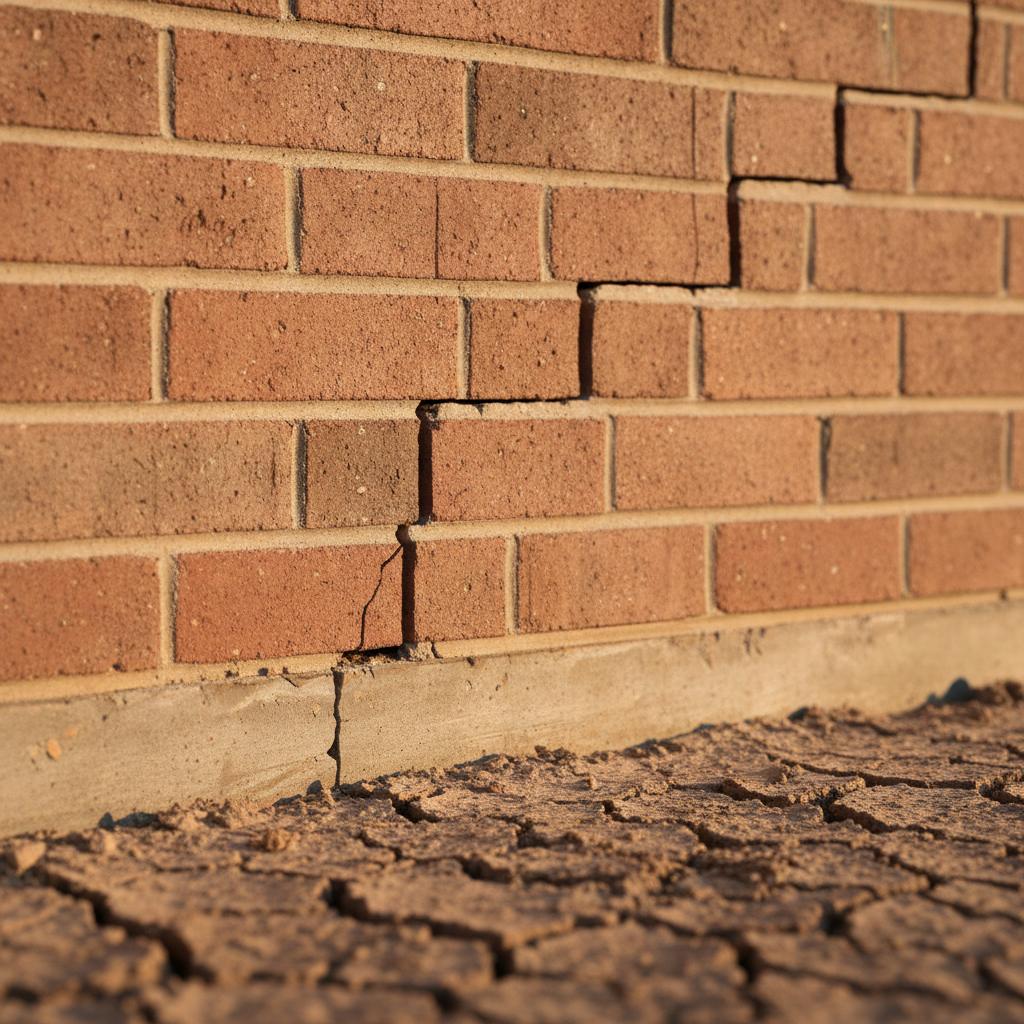
Here's the mechanism: clay particles are tiny plates of silicate minerals. Water molecules wedge between those plates, forcing them apart. When the soil dries, capillary water leaves, and the plates collapse back together. This happens over weeks and months, not just once. It happens every spring when rains soak the ground around your perimeter. It happens every August when 105-degree heat bakes the moisture out. When moisture rises, clay swells and lifts whatever sits on it. When it dries out, it shrinks and pulls away, and this cycle of vertical movement is why a slab can heave in one season and settle in the next.
A properly designed slab for expansive soil accounts for that vertical movement by going deeper, by using reinforcement designed to flex without tearing, or by sitting on posts that are driven below the active zone entirely. The code demands that. But the soil still moves. The foundation just moves with it, in a controlled way, without cracking the walls or sticking doors.
Think of it like a bridge on expansion joints. The joints don't stop the concrete from expanding and contracting with temperature. They allow it to do so safely. That's what modern foundation design does for clay.
What This Means for You in North Texas
If you're buying a home built after April 1, 2026: Demand that the builder provide a copy of the soil investigation report and the structural engineer's foundation design notes. The fact that it was built under 2024 IRC doesn't guarantee no future cracks, but it does mean someone tested the soil and designed accordingly. Homes without those documents were either built under older codes or on soil that seemed benign enough to skip testing. Either way, get a pre-purchase structural inspection from an engineer, not a general home inspector.
If you own an older home (pre-2026): The code update doesn't affect you retroactively. If your foundation is moving, moving faster, or already cracked, the IRC didn't cause it and won't fix it. You need an independent structural engineering assessment to understand what's happening: Is the movement active? Is it differential across the house or uniform? Do the soils need moisture management? Does the foundation need repair, or is it stable at a new baseline? Don't confuse a new building code with old house reality.
If you're building new: Your builder, architect, and structural engineer are now bound by tougher soil and foundation rules. That's a good thing, but it's also going to cost more. Soil testing runs $1,200 to $3,500 per home. Deeper or reinforced footings add 5 to 15% to foundation costs. Some builders will absorb it; others will pass it along. Either way, you're paying for better-informed design. That doesn't mean zero settlement; it means calculated, limited settlement based on known soil behavior. If a builder tries to sell you "the new code means no cracks ever," run.
Drainage and moisture management remain your responsibility. No code forces you to keep a soaker hose running during droughts or to grade away from your foundation. But if you don't, you're fighting the design. During hot, dry summers where temperatures regularly exceed 100 degrees and rainfall disappears for weeks, clay shrinks dramatically, deep cracks open in the ground, and the soil pulls away from foundation edges. A properly designed foundation with post-tensioned reinforcement can handle that, but only if you're not creating a moisture cliff on one side of your house by ignoring drainage.
The 2024 IRC is a real step forward in how engineers approach North Texas clay. But it's an engineering step, not a magic one. The soil still moves. The code just makes sure we see it coming and design for it accordingly.
Get a professional foundation inspection if you notice any signs of movement: stair-step brick cracks, doors or windows sticking, visible gaps between soil and foundation, or uneven floors. And if you're considering retaining wall work or major drainage changes, have an engineer involved from the start. The new code demands it for new construction. Your existing home deserves the same discipline.
Disusun dengan bantuan AI dan ditinjau terhadap sumber publik yang dirujuk di atas. Bukan pengganti inspeksi bersegel PE.